
Wine

“He causeth the grass to grow for the cattle, and herb for the service of man: that he may bring forth food out of the earth;
And wine that maketh glad the heart of man, and oil to make his face to shine, and bread which strengtheneth man's heart.” Psalm 104:14-15 KJV
Makes the Heart Glad
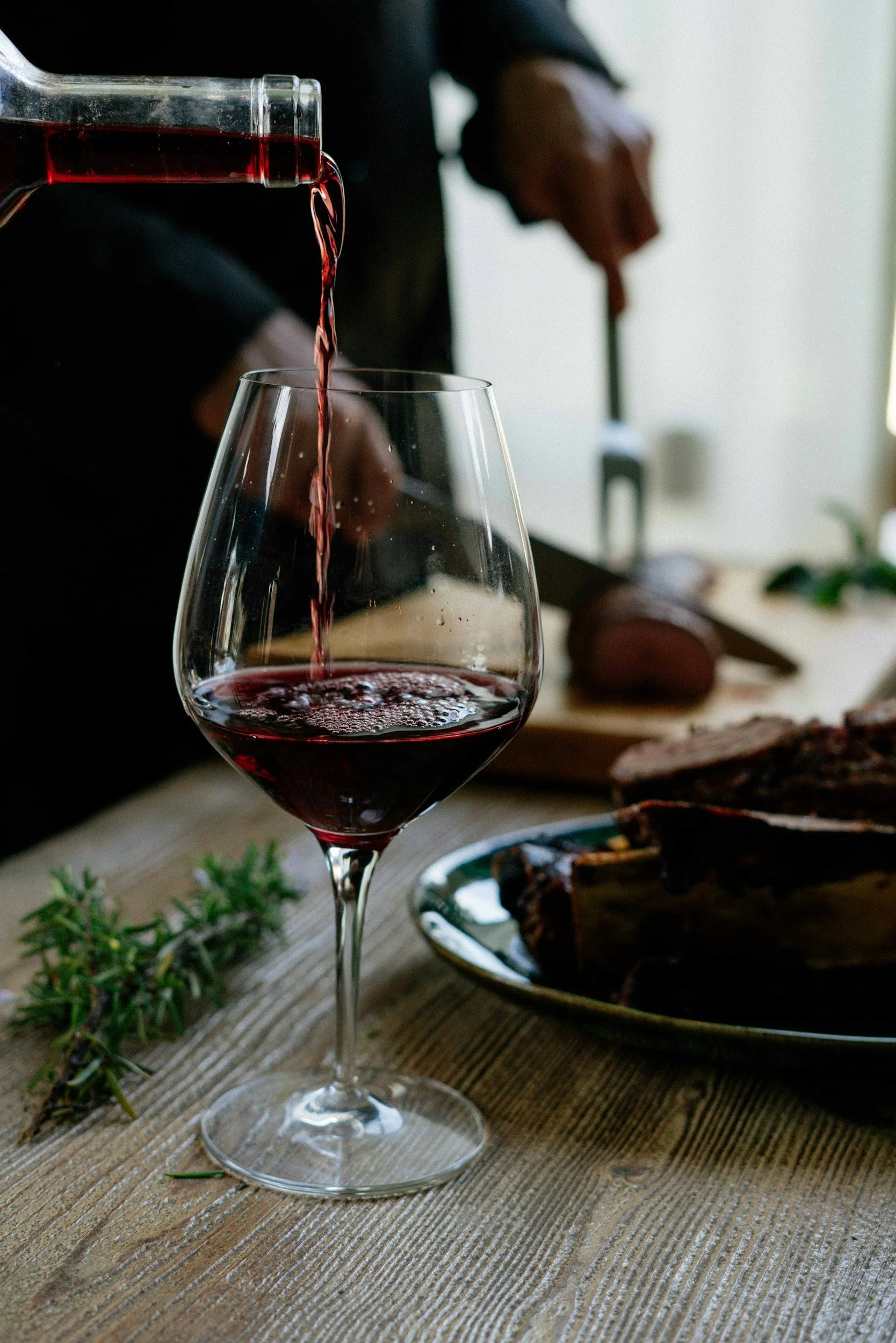
Wine is a running theme throughout the Bible. Wine {fermented grape juice} is a blessing from our Creator. Psalm 104 verse 15 lets us know God created wine to “make the heart glad”. Although wine today gets a bad reputation, we must remember that God created wine and He has intended purposes for how we are to use it.
In Bible days, {and in various cultures today} Wine was a common drink used in celebrations and special occasions. A perfect example of this one of the first recorded miracles of Jesus. In John Chapter Two, we see Jesus turned water into wine during a wedding feast, at the request of his mother.
“And the third day there was a marriage in Cana of Galilee; and the mother of Jesus was there: And both Jesus was called, and his disciples, to the marriage. And when they wanted wine, the mother of Jesus saith unto him, They have no wine. Jesus saith unto her, Woman, what have I to do with thee? mine hour is not yet come. His mother saith unto the servants, Whatsoever he saith unto you, do it. And there were set there six water pots of stone, after the manner of the purifying of the Jews, containing two or three firkins apiece. Jesus saith unto them, Fill the waterpots with water. And they filled them up to the brim. And he saith unto them, Draw out now, and bear unto the governor of the feast. And they bare it. When the ruler of the feast had tasted the water that was made wine, and knew not whence it was: (but the servants which drew the water knew;) the governor of the feast called the bridegroom, And saith unto him, Every man at the beginning doth set forth good wine; and when men have well drunk, then that which is worse: but thou hast kept the good wine until now. This beginning of miracles did Jesus in Cana of Galilee, and manifested forth his glory; and his disciples believed on him.” John 2:1-11 KJV
“And he took the cup, and gave thanks, and said, Take this, and divide itamong yourselves:
I say unto you, I will not drink of the fruit of the vine, until the kingdom of God shall come.”
Luke 22:17-18 KJV
Medicine
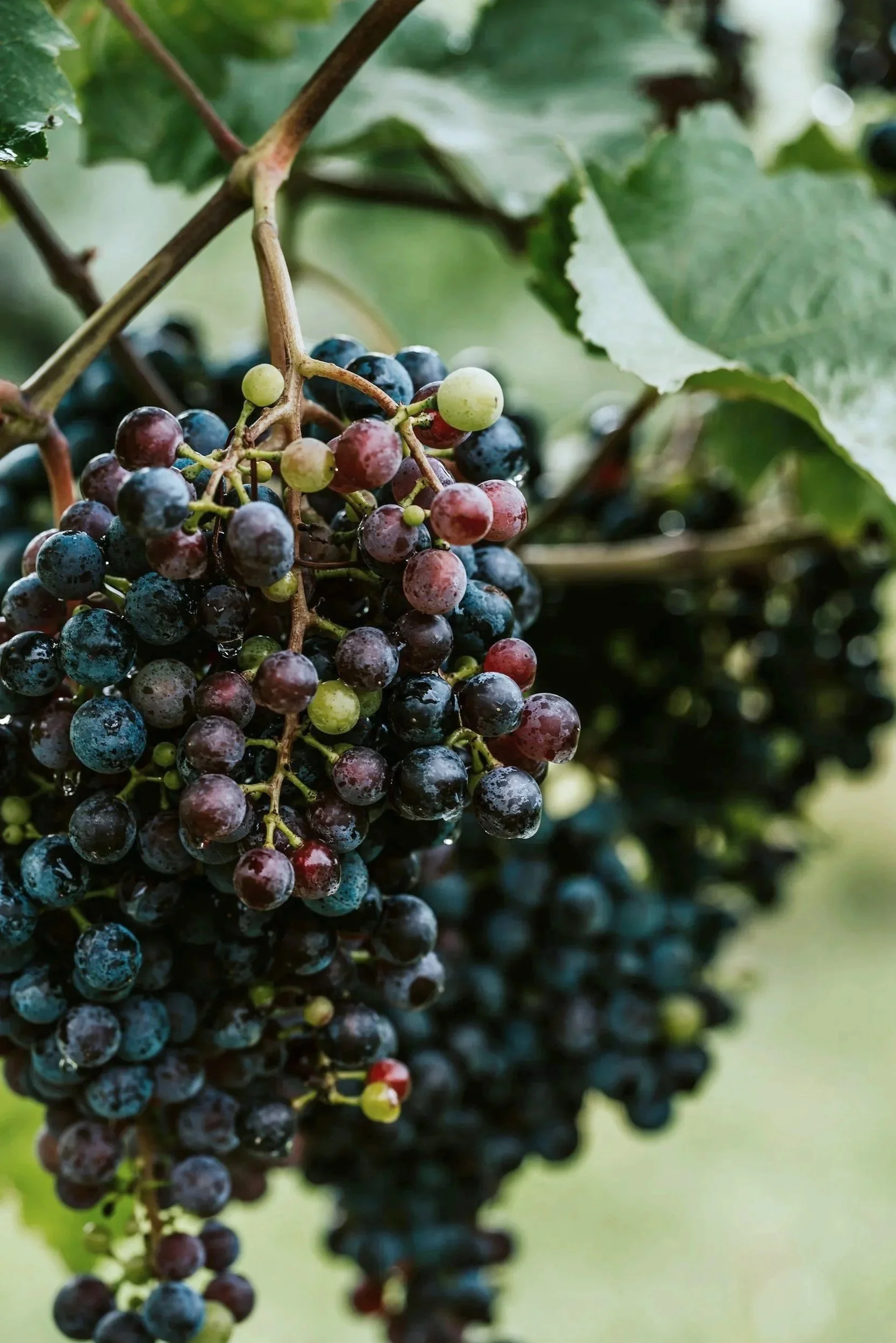
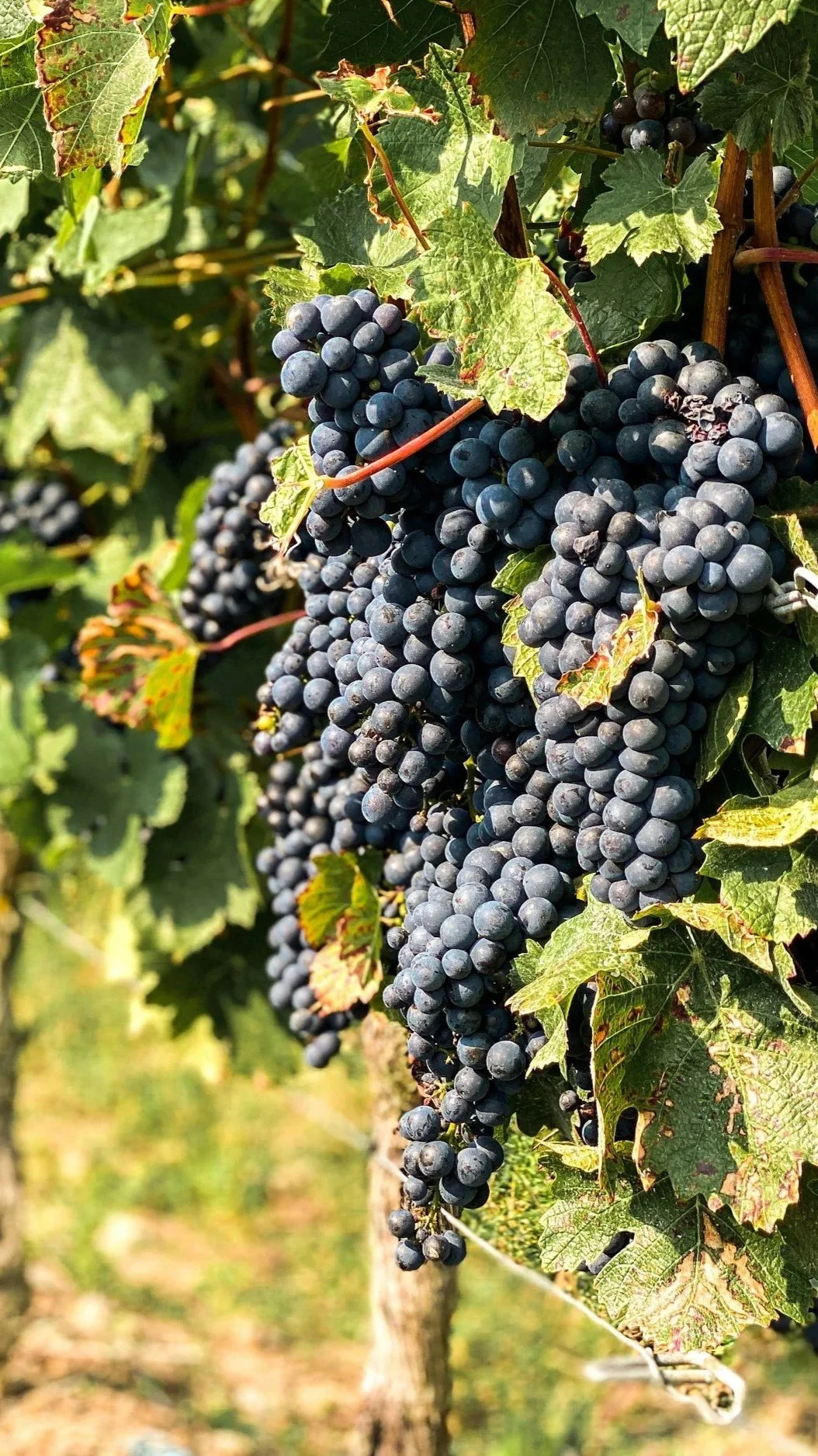
Just as with all of God’s seed bearing herbs, wine has both have Spiritual and Physical significance. Physically, wine, grapes, grape seeds and leaves are highly nutritional and medicinal.
Here are some Medicinal Actions of the grape herb from The Encyclopedia of Herbal Medicine:
Parts Used: Leaves, fruit, seeds, sap.
Medicinal Actions: Grape leaves, especially the red leaves, are astringent and anti-inflammatory. They are taken as an infusion to treat diarrhea, heavy menstrual bleeding, and uterine hemorrhage, as a wash for mouth ulcers, and as a douche for vaginal discharge. Red leaves and grapes are helpful in the treatment of varicose veins, hemorrhoids, and capillary fragility. The sap of the branches is used as an eye wash. Grapes are nourishing and mildly laxative and they support the body through illness, especially of the gastrointestinal tract and liver. Because the nutrient content in grapes is close to that of blood plasma, grape fasts are recommended for detoxification.
The Parable of the Good Samaritan
In the Bible, we see instances where wine was used medicinally to heal a wound, as a digestive aid, sedative, and pain reliever. Wine was also used to boost mood, ease suffering and to assist with the transition of passing on. We see a great example of this in the crucifixion of Christ. Jesus was offered myrrh and wine to ease his suffering. The scripture says Jesus “received it not”and instead endured the full strength of his physical and mental agony.
“And they bring him unto the place Golgotha, which is, being interpreted, The place of a skull. And they gave him to drink wine mingled with myrrh: but he received it not. And when they had crucified him, they parted his garments, casting lots upon them, what every man should take.”
Mark 15:22-24 KJV
In the Parable of the Good Samaritan, we see Olive oil and Wine used together as topical medicine to treat an open wound.
“And Jesus answering said, A certain man went down from Jerusalem to Jericho, and fell among thieves, which stripped him of his raiment, and wounded him, and departed, leaving him half dead. And by chance there came down a certain priest that way: and when he saw him, he passed by on the other side. And likewise a Levite, when he was at the place, came and looked on him, and passed by on the other side. But a certain Samaritan, as he journeyed, came where he was: and when he saw him, he had compassion on him, And went to him, and bound up his wounds, pouring in oil and wine, and set him on his own beast, and brought him to an inn, and took care of him. Luke 10:31-34 KJV
I like the way the Amplified version describes the medical action of Oil and Wine on the wound as soothing and disinfecting.
“And went to him and bandaged up his wounds, pouring oil and wine on them [to sooth and disinfect the injuries]; and he put him on his own pack-animal, and brought him to an inn and took care of him.” Luke 10:34 AMP
Among other things, I am very fascinated that the Samaritan man readily had Olive oil and Wine on hand. These two herbs were once highly regarded as valuable natural resources from our Creator. Today it is not common to pour Wine or Olive oil on an open wound. Clearly, these natural resources worked in the past, so why wouldn’t they still work today?
In addition, I am very humbled by his generosity. This man gave the very best of his personal resources, finances and his time to a complete stranger in need. A person like this is very rare today. I have hardly known any professing christians, friends or even family members like the Good Samaritan. Seems as if most people today are judge-mental, hard hearted and self centered. However, we must remember that generosity and compassion for our fellow man is the heart of God and His desire is for his people to emulate these actions.
“Now when you reap the harvest of your land, you shall not reap to the very corners of your field, nor shall you gather the gleanings (grain left after reaping) of your harvest. And you shall not glean your vineyard, nor shall you gather its fallen grapes; you shall leave them for the poor and for the stranger. I am the LORD your God.” Leviticus 19:9-10 KJV
In the Parable of the Good Samaritan, Jesus truly raises the bar for what it actually means to “love your neighbor”. As my husband says, loving your neighbor is not restricted to just the people living next door, but to every human being known or unknown. “For all the law is fulfilled in one word, even in this; Thou shalt love thy neighbour as thyself.” Galatians 5:14 KJV

“Give strong drink to him who is perishing, And wine to those who are bitter of heart.”
Proverbs 31:6 KJV
Timothy
Another Biblical example where wine is used as medicine is in 1 Timothy Chapterfive, where Paul instructs Timothy to drink wine for his stomach and frequent ailments. “Drink no longer water, but use a little wine for thy stomach's sake and thine often infirmities.” 1 Timothy 5:23 KJV
Why would Paul suggest wine as a remedy for Timothy’s stomach ache and other infirmities? Well just like Jesus used the example of wine for healing in the Parable of the Good Samaritan, it’s very likely that Paul also understood the healing capabilities of wine.
In addition to wines effect on gut bacteria, the book Low Fat Lies adds another possible reason for why Paul would have prescribed wine as medicine to Timothy:
“First, a substance in red wine, particularly American varieties, is salicylic acid-the active ingredient in aspirin. The reason aspirin helps prevent heart disease is that the salicylic acid in aspirin inhibits platelets from sticking together and forming blood clots in coronary arteries. By drinking red wine daily, we are getting a small dose of aspirin everyday. No wonder St. Paul advised Timothy: No longer drink only water, but take a little wine for… your frequent ailments (Timothy 5:23). In other words, take some aspirin and call me in the morning.
Here are some other interesting facts they include about the health benefits of Red Wine: {This is only a brief summary and not the full list}
Anthocyanin: A flavonoid that provides the red pigment in grapes. As an antioxidant, anthocyanin not only stops LDL from dangerously being oxidized, it has also been shown to inhibit an enzyme that causes cholesterol production. In addition, anthocyanin has been shown to prevent blood clots.
Caffeic acid: An anitoxidant with antibacterial and anti carcinogenic effects. Also found in Olive Oil.
Catechin: This flavonoid has been shown to reduce bad cholesterol oxidation and decrease blood clotting in arteries.
Cinnamic Acid: A polyphenol that has been shown to inhibit the growth of cancer cells.
Ellagic acid: Neutralizes potential carcinogens. rendering them incapable of attacking DNA, and prevents oxidized LDL from damaging cells.
Quercetin: Quercetin is an antioxidant. It also discourages inflammation. In a test tube it inhibits the growth of cancer cells.
Resveratrol: Another flavonoid, Resveratrol have been shown to stop LDL oxidation.
Vanillic Acid: Antibacterial, Antifungal.
Here are some historical facts that confirm how grapes and wine were used medicinally in Ancient times from the book The People’s Pharmacy Home and Herbal Remedies:
“Seeds of the fruit of the vine, once discarded as waste after the juice was pressed out for wine, have become the source of a a popular dietary supplement. Grapes were first cultivated near the Caspian Sea, and their use as food and drink spread throughout the Mediterranean world before the Bible was written. The ancient Greeks believed that wine had wonderful health benefits, and modern science has confirmed that wine has many useful properties. While the benefits of wine may be tarnished by the devastation associated with alcohol abuse, the positive aspects of grape seeds have no such liability.”
The Blood of Christ

“And as they were eating, Jesus took bread, and blessed it, and brake it, and gave it to the disciples, and said, Take, eat; this is my body. And he took the cup, and gave thanks, and gave it to them, saying, Drink ye all of it; For this is my blood of the new testament, which is shed for many for the remission of sins. But I say unto you, I will not drink henceforth of this fruit of the vine, until that day when I drink it new with you in my Father's kingdom.”
Matthew 26:26-29 KJV
The Last Supper & The New Covenant
The Last Supper or “Communion” was the final meal that Jesus shared with His disciples on earth right before He was arrested and crucified. This final meal symbolizes the beginning of the New Covenant, which was prophesied in Jeremiah Chapter 31.
“Behold, the days come, saith the LORD, that I will make a new covenant with the house of Israel, and with the house of Judah: Not according to the covenant that I made with their fathers in the day that I took them by the hand to bring them out of the land of Egypt; which my covenant they brake, although I was an husband unto them, saith the LORD: But this shall be the covenant that I will make with the house of Israel; After those days, saith the LORD, I will put my law in their inward parts, and write it in their hearts; and will be their God, and they shall be my people. And they shall teach no more every man his neighbour, and every man his brother, saying, Know the LORD: for they shall all know me, from the least of them unto the greatest of them, saith the LORD: for I will forgive their iniquity, and I will remember their sin no more. Jeremiah 31:31-34 KJV
Earlier on in this post, I wrote about the Biblical Food Laws in Leviticus Chapter eleven. These food laws were a part of the Law of Moses, also known as the Mosaic Law. God divinely spoke these laws to Moses to enforce food, hygiene, moral, ceremonial and civil laws for His people to follow. These laws were God’s Covenant with His people. The Ceremonial laws required routine animal sacrifices or burnt offerings to cleanse God’s people of their sins.
Through Jesus, God promised a New Covenant where He would instead write His law on the hearts of His people. In place of animal sacrifice, Jesus came as the final sacrificial lamb for the atonement for the sins of humanity. We can see this better explained in Hebrews Chapter Ten.
“For the law having a shadow of good things to come, and not the very image of the things, can never with those sacrifices which they offered year by year continually make the comers thereunto perfect. For then would they not have ceased to be offered? because that the worshippers once purged should have had no more conscience of sins. But in those sacrifices there is a remembrance again made of sins every year. For it is not possible that the blood of bulls and of goats should take away sins.Wherefore when he cometh into the world, he saith, Sacrifice and offering thou wouldest not, but a body hast thou prepared me: In burnt offerings and sacrifices for sin thou hast had no pleasure. Then said I, Lo, I come (in the volume of the book it is written of me,) to do thy will, O God. Above when he said, Sacrifice and offering and burnt offerings and offering for sin thou wouldest not, neither hadst pleasure therein; which are offered by the law;Then said he, Lo, I come to do thy will, O God. He taketh away the first, that he may establish the second. By the which will we are sanctified through the offering of the body of Jesus Christ once for all. And every priest standeth daily ministering and offering oftentimes the same sacrifices, which can never take away sins: But this man, after he had offered one sacrifice for sins for ever, sat down on the right hand of God; From henceforth expecting till his enemies be made his footstool. For by one offering he hath perfected for ever them that are sanctified. Whereof the Holy Ghost also is a witness to us: for after that he had said before, This is the covenant that I will make with them after those days, saith the Lord, I will put my laws into their hearts, and in their minds will I write them; And their sins and iniquities will I remember no more. Now where remission of these is, there is no more offering for sin.” Hebrews 10:118 KJV
Jesus the Passover Lamb
Every time I take communion, I think of how difficult it would have been for Jesus to share a last meal with friends knowing he would be killed soon after. In spite of His internal struggle as well as a betrayer at the table, He held it together and fulfilled his great mission of instituting the New Covenant and sacrificing his life for the sins of humanity.
“When the hour had come, Jesus reclined at the table with His apostles. And He said to them, “I have eagerly desired to eat this Passover with you before My suffering. For I tell you that I will not eat it again until it is fulfilled in the kingdom of God.” After taking the cup, He gave thanks and said, “Take this and divide it among yourselves. For I tell you that I will not drink of the fruit of the vine from now on until the kingdom of God comes.” And He took the bread, gave thanks and broke it, and gave it to them, saying, “This is My body, given for you; do this in remembrance of Me.” In the same way, after supper He took the cup, saying, “This cup is the new covenant in My blood, which is poured out for you. Look! The hand of My betrayer is with Mine on the table. Indeed, the Son of Man will go as it has been determined, but woe to that man who betrays Him.”Then they began to question among themselves which of them was going to do this.” Luke 22:14-23 KJV
In Matthew Chapter Twenty Six, the account of the Last Supper is also recorded but this version specifies that the wine which represents the blood of Christ, was shed for the remission of sins.
“And he took the cup, and gave thanks, and gave it to them, saying, Drink ye all of it; For this is my blood of the new testament, which is shed for many for the remission of sins. But I say unto you, I will not drink henceforth of this fruit of the vine, until that day when I drink it new with you in my Father's kingdom. Matthew 26:27-29 KJV
Upon instituting the New Covenant, Jesus told his disciples to honor his memory by drinking wine, a symbol of His blood and eating bread, a symbol of His body, in remembrance of Him. In First Corinthians Chapter 11, Paul reestablishes that Followers of Christ should remember Him by taking Communion until He returns.
“For I have received of the Lord that which also I delivered unto you, That the Lord Jesus the same night in which he was betrayed took bread: And when he had given thanks, he brake it, and said, Take, eat: this is my body, which is broken for you: this do in remembrance of me. After the same manner also he took the cup, when he had supped, saying, This cup is the new testament in my blood: this do ye, as oft as ye drink it, in remembrance of me. For as often as ye eat this bread, and drink this cup, ye do shew the Lord's death till he come.” 1 Corinthians 11:23-26 KJV
Misuse
I don’t know about you, but regretfully, I am very guilty of misusing wine in my past. In studying Gods word, I now see that we can either abuse wine or we can use it the way God intended for communion, healing and in times of celebration. There are several examples of wine misuse throughout the Bible. One example is in 1 Corinthians Chapter 11, where the people were getting drunk when gathering to take the Lord’s Supper.
“Now in this that I declare unto you I praise you not, that ye come together not for the better, but for the worse. For first of all, when ye come together in the church, I hear that there be divisions among you; and I partly believe it. For there must be also heresies among you, that they which are approved may be made manifest among you. When ye come together therefore into one place, this is not to eat the Lord's supper. For in eating every one taketh before other his own supper: and one is hungry, and another is drunken. What? have ye not houses to eat and to drink in? or despise ye the church of God, and shame them that have not? What shall I say to you? shall I praise you in this? I praise you not. 1 Corinthians Chapter 11:17-22 KJV
Paul goes on to say that those who take the Lord’s Supper unworthily are guilty of Christ’s blood and body. He goes on to add that those in the church who take communion unworthily are at risk of bodily sickness. The Lord’s supper is a sacred and holy act that should we should partake in with the right intentions and the utmost respect.
Wherefore whosoever shall eat this bread, and drink this cup of the Lord, unworthily, shall be guilty of the body and blood of the Lord. But let a man examine himself, and so let him eat of that bread, and drink of that cup. For he that eateth and drinketh unworthily, eateth and drinketh damnation to himself, not discerning the Lord's body. For this cause many are weak and sickly among you, and many sleep. For if we would judge ourselves, we should not be judged. But when we are judged, we are chastened of the Lord, that we should not be condemned with the world.
Wherefore, my brethren, when ye come together to eat, tarry one for another. And if any man hunger, let him eat at home; that ye come not together unto condemnation. And the rest will I set in order when I come. 1 Corinthians 11:17-34 KJV
Before we take The Lords Supper as a family, we first pray, ask the Lord to forgive us our sins and cleanse us from all unrighteousness. If we have guests at the home, Shaun always explains the consequences of taking Communion unworthily beforehand.
Throughout my life, I have been in and out of many church buildings and I have never once heard this warning given. Seems the sacredness of The Lord’s Supper has been reduced to monthly rituals that are more about entertaining the audience than remembering the sacrifice of Christ. In place of good quality bread, wine or grapejuice, the body and blood of Christ has been watered down to wafers and grape juice wrapped in plastic containers. These complicated hard to open concoctions, are carelessly given out to everyone in attendance without ever given Pauls warning. Could this perhaps be one of the many reasons why so many professing Christians are stuck in a perpetual cycle of sickness?
“Now the practices of the sinful nature are clearly evident: they are sexual immorality, impurity, sensuality (total irresponsibility, lack of self-control), idolatry, sorcery, hostility, strife, jealousy, fits of anger, disputes, dissensions, factions [that promote heresies], envy, drunkenness, riotous behavior, and other things like these. I warn you beforehand, just as I did previously, that those who practice such things will not inherit the kingdom of God.” Galatians 5:19-21 AMP