Do I Have to Go to Church?

“Now therefore ye are no more strangers and foreigners, but fellow citizens with the saints, and of the household of God; And are built upon the foundation of the apostles and prophets, Jesus Christ himself being the chief corner stone.”
Ephesians 2:19-20 KJV
What is the Church?
We were sitting around a dining table one evening, about seven of us, during a men’s bible study connected to a local church. One young man at the table named “Chad” had previously attended the church but stopped going. However, he still came regularly to this weekly gathering of believers. At some point during our discussion, one of the elder brothers said, “Pray for this brother [Chad] to find a church home.” We all knew he was saying that Chad needed to get back into a church building, and become part of the congregation. But Chad responded by saying, “I went to church for a while; between that and reading God’s Word, I became equipped. Now I feel called to go out and make disciples. I don’t feel like I need the building anymore.” I heard someone else mention that we shouldn’t forsake the assembly. Then, I chimed in, “Well… aren’t we assembling right now?” It was an interesting conversation, especially since we [our family] were not members of any church at the time. Leaving the conversation, I wondered, are we forsaking the assembly by not attending a church (as we know them today)? So, I took my questions to the Lord and sought clarity in the scriptures.
Church First References
I started my research by investigating the word church in the Bible. The word “church” in the New Testament comes from the Greek word ekklesia, which means “a called-out assembly” or “gathering.” And interestingly enough, the very first time the word “church” appears in the Bible, it comes straight from Jesus.
In Matthew 16:18, He says to Peter, “And I say also unto thee, That thou art Peter, and upon this rock I will build my church; and the gates of hell shall not prevail against it.”
Then two chapters later, Jesus uses the word “church” again, this time to explain a function of the church.“Moreover if thy brother shall trespass against thee, go and tell him his fault between thee and him alone: if he shall hear thee, thou hast gained thy brother. But if he will not hear thee, then take with thee one or two more, that in the mouth of two or three witnesses every word may be established. And if he shall neglect to hear them, tell it unto the church: but if he neglect to hear the church, let him be unto thee as an heathen man and a publican” -Matthew 18:15–17 KJV.
In this passage, Jesus explains a process for dealing with sin among believers, and part of that process involves bringing the issue “unto the church.” So, even before the church as we know it was formally established, Jesus was showing us the role the Church would play in maintaining order among His followers. He wasn’t just talking about a future gathering only, He was describing how the church would operate as a body of people committed to walking in truth and resolving issues among believers.

An Assembly of Believers
The third time we see the term church used was during a gathering of believers right after Peter and John were threatened by the religious council for preaching in the name of Jesus.
Here’s the backstory; In Acts chapter four, after healing a man and proclaiming the Gospel, they {Peter and John} were detained and warned not to speak in Jesus’ name again. When they were released, the book of Acts says they went to “their own company”, an assembly of believers, and told them everything the council had said.
“And being let go, they went to their own company, and reported all that the chief priests and elders had said unto them” - Acts 4:23 This was a real-world situation involving the threat of persecution against the Followers of Christ. And how did this assembly of believers respond? They prayed together! The place where they were assembled was shaken, and they were all filled with the Holy Spirit.
In Acts chapter 4:32-37, we get to see how this same assembly of believers lived and operated together. They sold their possessions and brought all the proceeds to the apostles so that if any among those gathered had a need, it could be met. However, in Acts chapter 5, the assembly witnesses God’s judgement. One couple, Ananias and Sapphira, sold a possession but secretly held back part of the proceeds. When Peter confronted them each individually, they both dropped dead. And here’s the thing: it happened publicly, in front of the whole assembly of believers. The result of that action was “And great fear came upon all the church and upon as many as heard these things” -Acts 5:11 KJV.
So, the assembly of believers are referred to as ‘all the church.’ We know that the church all prayed together when they were met with the threat of persecution. We also see that some were held publicly accountable in front of the church for how they lived. So again, we see specific roles with the church; one to address the threat from the religious council with prayer, but they also witnessed God’s judgement against Ananias and Sapphira.
Church in The Old Testament?

“Now therefore, if ye will obey my voice indeed, and keep my covenant, then ye shall be a Peculiar treasure unto me above all people: for all the earth is mine: And ye shall be unto me a Kingdom of Priests, and an Holy nation.
Exodus 19:5–6 KJV
In Acts chapter 7, when Stephen was on trial and was addressing the religious council, he actually referred to the Israelites in the wilderness as the “church in the wilderness”.
“This is he, that was in the church in the wilderness with the angel which spake to him in the mount Sinai, and with our fathers: who received the lively oracles to give unto us” Acts 7:38 KJV.
I found this to be very interesting. Because the word church wasn’t a phrase we heard the Israelites use in the Old Testament. But here, Stephen is looking back at Moses and the people of Israel and referring to them as the “church.”
The exact moment Stephen was pointing back to was when God spoke to Moses at Mount Sinai and gave him the “lively oracles” to give unto the Israelites, who at the time were a people assembled in the wilderness with no real permanent home.
In Exodus 19:5–6, God told the Israelites, “Now therefore, if ye will obey my voice indeed, and keep my covenant, then ye shall be a peculiar treasure unto me above all people: for all the earth is mine: And ye shall be unto me a kingdom of priests, and an holy nation. These are the words which thou shalt speak unto the children of Israel.”
And here’s what ties it all together, Peter later uses the same language to describe believers in Christ: “a chosen generation, a royal priesthood, an holy nation, a peculiar people” (1 Peter 2:9).
So when Stephen called the Israelites “the church in the wilderness,” he was making a point in that the identity of God’s people has always been about covenant and obedience. Whether in the wilderness with Moses or in the early gatherings outside, the church has always been those who obey His voice, keep His covenant, and live as His holy people.
What Did We Learn?
Let’s do a quick recap of the first four times we see the word church mentioned in Scripture. First, Jesus says, “I will build my church” (Matthew 16:18)—He makes it clear that He is the one doing the building. Then in Matthew 18, He shows us that the church has a very specific role, especially when it comes to addressing sin and accountability within the body of believers. The third time we see the word church, is in Acts 5, where Ananias and Sapphira are judged for lying about their true possessions and it says great fear came upon all the church. The fourth time is in Acts 7, when Stephen refers to the Israelites with Moses as “the church in the wilderness.”
What’s really worth pointing out is that none of these early references to church mention a physical building. So if Jesus wasn’t talking about pulpits and worship teams when He said He would build His church, what was He talking about? Let’s take some time to unpack what it really means when Jesus says, “I will build my church.” Because clearly, He’s talking about something spiritual.
The Church is a Spiritual Building!

“Howbeit The Most High dwelleth not in temples made with hands; as saith the prophet, Heaven is my throne, and earth is my footstool: what house will ye build me? saith the Lord: or what is the place of my rest? Hath not my hand made all these things?”
Acts 7:48–50 KJV
So we’ve been walking through the first few times the word church shows up in the Bible, and what’s really interesting is how much we learned from Jesus in those early references. The very first time He says the word church, He’s not talking about a building or some fancy structure. Although Jesus does say, “I will build my church, and the gates of hell shall not prevail against it” (Matthew 16:18). That word build is key. Jesus wasn’t talking about a physical building, He had plans on building a people; a spiritual house, not a physical one.
We can actually see clear evidence that God’s intent was never to dwell permanently in physical buildings, but to build a spiritual house made up of people. Stephen makes this point when he’s speaking to the religious council in Acts 7. After walking them through the history of Moses and the Israelites {the church in the wilderness} Stephen shifts the focus from the temple {which was still standing at this time} to the presence of God Himself.
If we look at Acts 7:48–50 (KJV), Stephen says: “Howbeit the most High dwelleth not in temples made with hands; as saith the prophet, Heaven is my throne, and earth is my footstool: what house will ye build me? saith the Lord: or what is the place of my rest? Hath not my hand made all these things?”
Stephen is quoting the prophet Isaiah here, and he’s driving home the fact that God is too big for a building, Heaven is His throne and Earth is His footstool. But, the religious leaders at that time were still clinging to a physical temple as if it was the only place God could dwell.
But the point Stephen was making (which they ultimately killed him for) was that God was shifting the focus to a spiritual house, made of people who believe in Jesus. That’s the Church He’s building. Not with bricks, but with “lively stones” which is you and me.
“Ye also, as lively stones, are built up a spiritual house, an holy priesthood, to offer up spiritual sacrifices, acceptable to God by Jesus Christ” -1 Peter 2:5.
We also see Paul make this point in 1 Corinthians 3:9, where he writes, “ye are God’s building.” And in Ephesians 2:20–22 he says, “now therefore ye are no more strangers and foreigners, but fellow citizens with the saints, and of the household of God; And are built upon the foundation of the apostles and prophets, Jesus Christ himself being the chief corner stone; In whom all the building fitly framed together groweth unto an holy temple in the Lord: In whom ye also are builded together for an habitation of God through the Spirit.”
That means the church isn’t a place you walk into, it’s a people God is fitting together in a spiritual building {our bodies} where He dwells. So when Jesus said He would build His church, He was talking about us; a spiritual house made up of those who believe in Him.

Early Church Assembly
Church in the House
Essentially, the early church gathered, prayed, held each other accountable, and carried the presence of God wherever they went. The early church didn’t have big buildings in the beginning, although they did gather in homes.
“Likewise greet the church that is in their house.”— Romans 16:5 (KJV)
“The churches of Asia salute you. Aquila and Priscilla salute you much in the Lord, with the church that is in their house.” 1 Corinthians 16:19 (KJV)
“Salute the brethren which are in Laodicea, and Nymphas, and the church which is in his house.”— Colossians 4:15 (KJV)“
And to our beloved Apphia, and Archippus our fellow soldier, and to the church in thy house.” Philemon 1:2 (KJV)
Early Church in Action
When they were not gathering to handle church business, the early church was actively preaching the Gospel everywhere all the time. The efforts didn’t stop after their gatherings, in fact the opposite was true. Here are some things the Early church did.
They prayed together and worshiped - “And they continued stedfastly in the apostles' doctrine and fellowship, and in breaking of bread, and in prayers.” - Acts 2:42 KJV.
They preached the Word - Paul reminded Timothy to preach the word and be ready in season and out of season “Preach the word; be instant in season, out of season; reprove, rebuke, exhort with all longsuffering and doctrine. For the time will come when they will not endure sound doctrine; but after their own lusts shall they heap to themselves teachers, having itching ears (2 Timothy 4:2-3 KJV).
They made disciples - Jesus told them to go teach all nations (Matthew 28:19–20), and the early church ran with that in the book of Acts.
They helped one another “And all who believed were together and had all things in common. And they were selling their possessions and belongings and distributing the proceeds to all, as any had need” - Acts 2:44-45.
There was order - Paul told Titus to appoint elders in every city “This is why I left you in Crete, so that you might put what remained into order, and appoint elders in every town as I directed you” -Titus 1:5.
Paul also laid out to Timothy what kind of people should lead in 1 Timothy 3. The church had order and accountability.
Exercising Spiritual gifts - Paul teaches all about it in 1 Corinthians 12 and Romans 12—God gave different gifts to different people so the whole body could grow and function.
Serving Those in Need
They served one another when needs arose. An example is in Acts, when the church appointed men the duty of ensuring widows were not neglected during food distribution “Now in these days when the disciples were increasing in number, a complaint by the Hellenists arose against the Hebrews because their widows were being neglected in the daily distribution. And the twelve summoned the full number of the disciples and said,
“It is not right that we should give up preaching the word of God to serve tables.Therefore, brothers, pick out from among you seven men of good repute, full of the Spirit and of wisdom, whom we will appoint to this duty.But we will devote ourselves to prayer and to the ministry of the word.” And what they said pleased the whole gathering, and they chose Stephen, a man full of faith and of the Holy Spirit, and Philip, and Prochorus, and Nicanor, and Timon, and Parmenas, and Nicolaus, a proselyte of Antioch. These they set before the apostles, and they prayed and laid their hands on them” -Acts 6:1-6.
“…. based on the scriptures covered here, it would stand to reason that maybe the real question isn’t, “Do I have to go to church?” Maybe the better question is, “Am I being the Church?”

So, Do We Have to Go to Church?
That’s really a question all believers should take to the Lord directly for guidance and clarity. But based on the scriptures covered here, it would stand to reason that maybe the real question isn’t, “Do I have to go to church?” Maybe the better question is, “Am I being the Church?” Because if we’ve learned anything, it’s that we are the Church {followers of Christ} joined together as one body, with Jesus as the head. That’s true whether we are in a ‘church’ building or at a coffee shop. The place doesn’t define the Church, the people do. Jesus is the one who builds His Church, and scripture tells us it’s not made of bricks, it’s a spiritual house.
Scripture shows us that the Church has order, a purpose, and specific functions. It addresses sin within the body, it prays together, it responds to real-life events affecting believers, and it encourages the use of spiritual gifts. The church also teaches the Word even when people don’t want to hear sound doctrine. The church exists to encourage, correct, love, and make disciples. Even Jesus’ first sermon, the Sermon on the Mount (Matthew 5), wasn’t preached in a building. It happened outside in Galilee.
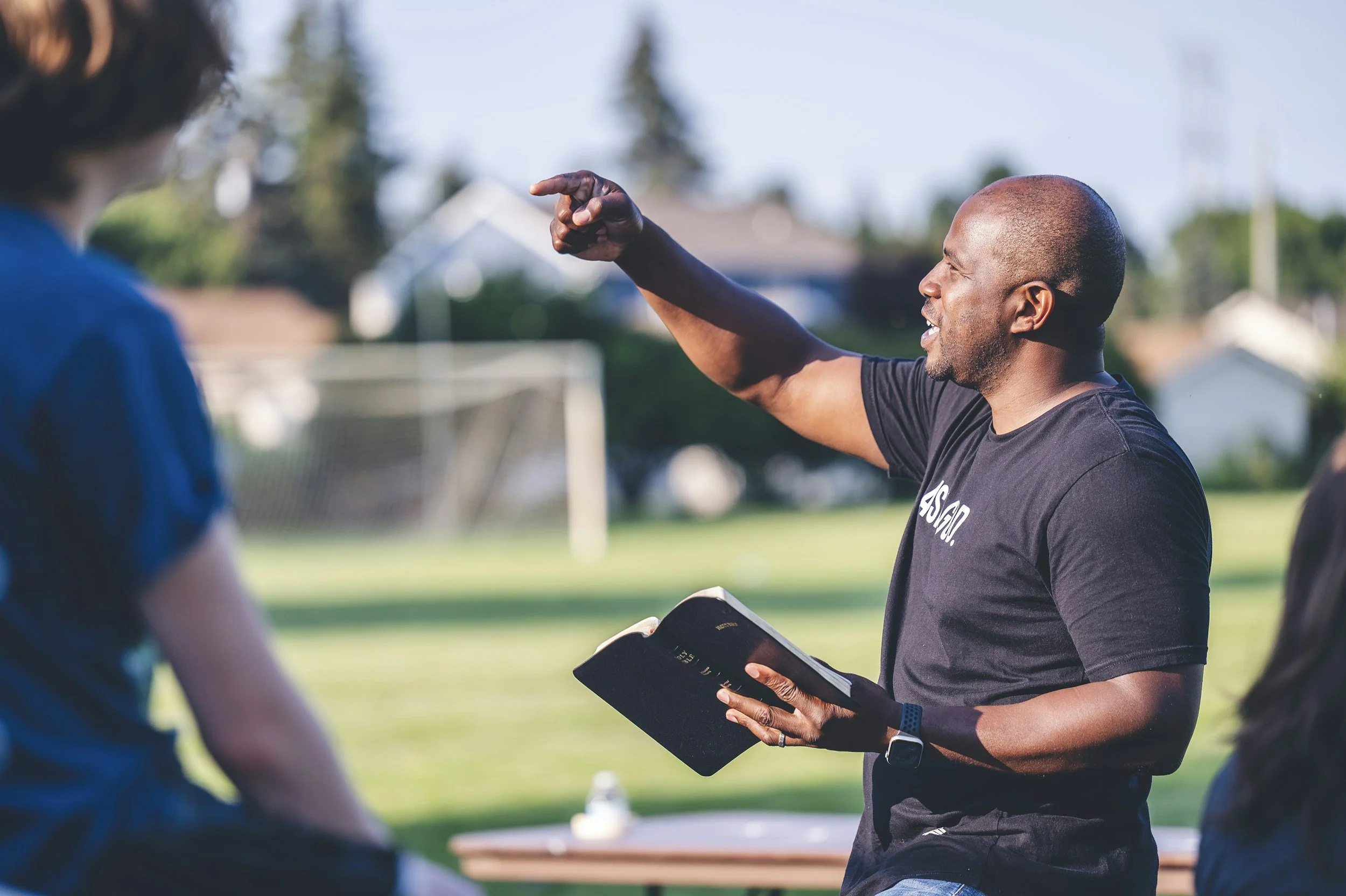
Biblically speaking, if you and a group of believers gather regularly at a coffee shop in one accord to follow Jesus, teach His Word, pray, make disciples, walk in truth and correct in love….that, too, is Church.
So now the deeper question is this: Are we walking in that identity? Are you fulfilling your role within the body of Christ? Are you using the gifts Jesus gave you (not for show) for the edification of the body and the spreading of His gospel? Because being the Church is more than just showing up somewhere weekly. It’s about obeying His voice, staying connected to the body, and doing your part to build up others in faith and truth. That’s Church.
Do We Attend a Church Building?
We do not attend a church building. In fact, we feel we have been led out of the building, but not out of the Body. But let me be clear, our entire family was first Baptized in a local church and have learned much from attending church in the buildings that we see today. However, we now conduct church in our homes and regularly assemble with fellow believers in Christ. We believe, as did the early church through their actions, that most of the Kingdom’s work must take place outside of the building.
I can recall one of the sayings of Pastor Derwin Gray of Transformation Church. He was a former NFL player, and often used NFL analogies to help drive home his point. He used to say, “This is the huddle, now go play the game.” And he was right. A church service {gathering} should be a huddle designed to strategize, encourage, and align ourselves with scripture before it’s game time {going out and making disciples}.
That’s what we are praying to build here. A space that fosters real fellowship and a focus on being the church. We have a vision from the Lord to make this site and our outreach efforts, a “Church Home for the Church Homeless.”